







Food safety audits reveal more than whether a facility has the right paperwork. They show how effectively a manufacturer manages risk, maintains its processing environment, and integrates food safety into everyday operations.
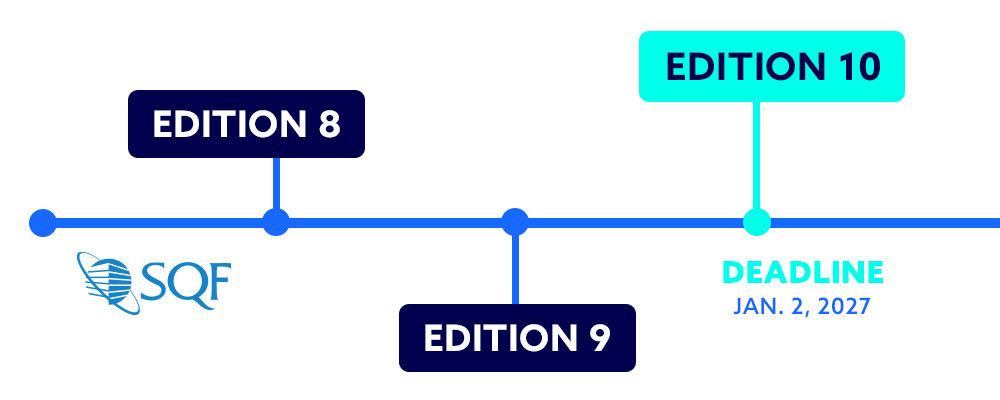
With SQF Edition 10 audits anticipated to begin January 2, 2027, food manufacturers have an important opportunity to strengthen their food safety programs before the new requirements take effect. The date remains subject to completion of the Global Food Safety Initiative (GFSI) benchmarking process.
A successful transition requires proactive prevention, stronger food safety programs, effective supplier oversight, and consistent execution that keeps manufacturers audit-ready year-round.
What’s changing with SQF Edition 10?
SQF Edition 10 introduces changes intended to strengthen food safety management, improve audit scoring, and place greater emphasis on risk and food safety culture. Key changes include:
- A new food safety culture assessment plan. All sites covered by the SQF Food Safety Codes must have a plan to assess their food safety culture. Manufacturers need to demonstrate how food safety is understood, practiced, and reinforced throughout the organization.
- Updated audit scoring. Edition 10 introduces higher point deductions for non-conformances involving designated Core Clauses. Minor findings in these clauses carry a two-point deduction, compared with one point for other minor findings. Core Clause major findings carry a seven-point deduction, compared with five points for other major findings.
- Greater emphasis on risk-based controls. Core Clauses identify foundational food safety requirements, including management commitment, approved supplier programs, food safety plans, environmental monitoring, corrective and preventive action, allergen management, sanitation, and foreign material control.
- Revised code structure and numbering. Manufacturers should review their existing procedures and internal audit checklists to ensure they align with the applicable Edition 10 requirements. Companies that mirror SQF clause numbers in their own documentation may need to update them.
- A digitized code experience. SQFI has moved the codes to an interactive online format, with code selection tools, embedded resources, translations, and printable versions.
These changes make it especially important to assess existing programs, train employees and supervisors, review recurring audit findings, and verify that controls work as intended. Manufacturers should consult the applicable code and SQFI guidance to determine exactly what their facilities need to change.
Your processing environment tells a story
An auditor’s assessment begins long before they review a corrective action report. The condition of the facility, maintenance of equipment, employee hygiene, and organization of the production floor all provide visual evidence of a company’s commitment to food safety.

As Nancy Johnson (formerly Scharlach), President and Chief Technical Director for FSMA International, explained during a recent TraceGains virtual event:
“A lot more time is being spent out on the production floor. It’s really important to focus on what are you processing and how you’re mitigating risk in the operation and the building itself.”
A disorganized facility, poorly maintained equipment, or inconsistent hygiene practices can raise questions about the effectiveness of the broader food safety program. If an auditor sees chaos, they may question whether similar gaps exist in sanitation, hazard controls, or operational oversight.
Conversely, a clean, well-maintained facility demonstrates that food safety is an operational priority rather than a collection of written policies.
“Paperwork isn’t everything. It’s how you execute your operations and the level of hygiene in the facility that really drives the food safety. That’s what auditors are starting to pick up on and that’s what I personally look at, especially internationally; how you are implementing, perceiving, and culturally integrating these food safety programs into the facility.”
— Nancy Johnson, President and Chief Technical Director, FSMA International
Food safety culture is visible in everyday behavior. Employees need to understand why procedures matter, follow them consistently, and recognize their responsibility for preventing contamination and other hazards. Under Edition 10, manufacturers also need a defined way to assess their culture and identify opportunities for improvement.
Close the gap between written programs and actual practices
One of the biggest risks during an SQF audit is the disconnect between documented procedures and what happens in practice. A sanitation program may look excellent on paper, but inconsistent execution can undermine its effectiveness. Supplier approval procedures offer limited protection if teams cannot verify that required documentation is current and complete.
“Focus on operations, building, equipment, and how written programs are executed; the visual evidence and the link between the written program and how they’re actually controlling those food safety hazards. A lot of times you’re going to see a weakness or gap between the written program and actual operations. That’s what I see the most in worldwide facilities. Documentation, emailed or uploaded, may not cover everything.”
— Nancy Johnson, President and Chief Technical Director, FSMA International
Closing these gaps requires routine verification, clear accountability, employee training, and corrective actions that address root causes rather than symptoms. Internal audits and regular facility inspections can help identify weaknesses early, giving teams time to resolve them before certification is on the line.
Make proactive prevention part of your food safety culture
Audit preparation shouldn’t begin weeks before an assessment. It should be built into daily operations, from supplier qualification and document management to sanitation, equipment maintenance, and hazard mitigation.
That means looking upstream, too. Manufacturers need confidence that suppliers have effective controls in place before ingredients arrive at the facility.
“It’s important that we focus on proactive food safety; how do they mitigate that risk in the plant first before I receive that product. That’s what I focus on in an auditing situation.”
— Nancy Johnson, President and Chief Technical Director, FSMA International
A proactive approach connects supplier oversight with internal food safety practices. When teams can access accurate, current supplier documentation, identify missing information, and follow up on potential risks before they affect production, they can strengthen visibility across the supply chain and reduce last-minute audit scrambles.
With January 2, 2027, approaching as the anticipated start of Edition 10 audits, now is the time to assess gaps, review supplier controls, and build a practical plan for compliance. Don’t wait for an auditor to uncover weaknesses that could have been addressed months earlier.
Strengthen supplier oversight with modern Supplier Management
Food safety starts well before ingredients reach your production floor. Modern Supplier Management helps food and beverage manufacturers centralize supplier information, streamline document collection, and improve visibility into the records needed to support supplier qualification and ongoing compliance.
Instead of chasing paperwork when an audit approaches, teams can establish more consistent processes for gathering, reviewing, and maintaining supplier documentation throughout the year.
Ready to make audit preparation more proactive? Explore modern Supplier Management from TraceGains to simplify supplier documentation workflows, strengthen supplier oversight, and help your team prepare for the next SQF audit.