






Are you prepared for both sides of PPWR compliance?
While much of the attention has focused on packaging materials to deliver recyclability targets, compliance extends well beyond recyclability. Manufacturers must also ensure any new packaging maintains performance on the production line and has the proper documentation needed to demonstrate compliance.
For food and beverage manufacturers across Europe, August 12, 2026, marked a critical regulatory milestone. The Packaging and Packaging Waste Regulation (PPWR) has generally begun to apply on a phased basis introducing new requirements for packaging design, increasing recyclability, improving recycled content use, and harmonizing labeling across the EU.
Two important challenges that should be considered are:
- Adapting packaging and production processes to evolving packaging requirements
- Maintaining the supplier, material and compliance data needed to support regulatory claims
Together, Videojet and TraceGains help manufacturers address both potential challenges.
What does PPWR mean for food and beverage packaging?
For many food and beverage manufacturers, PPWR is accelerating packaging initiatives that were already underway, including the adoption of lightweighting, increasing the use of recycled-content materials, and the priority of delivering packaging with improved recyclability.
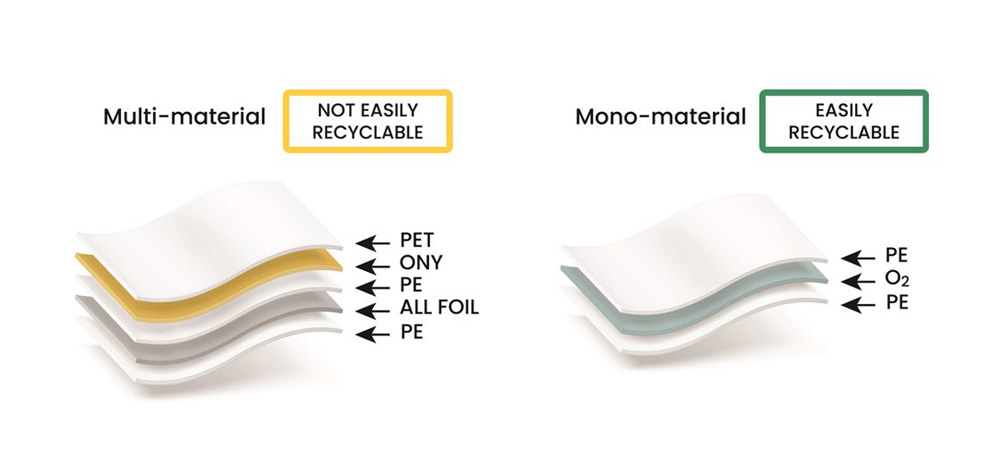
These changes can have practical implications on a manufacturer’s production floor, including their coding and marking solutions. New package designs may alter where codes should be placed or what data is entered into human and machine-readable codes to be read throughout the supply chain. In addition, mono-material flexible films, designed to improve recyclability when compared to traditional multi-layer metalized films, can exhibit different stretching and sealing characteristics. These variances may require adjustments to sealing temperatures, machine settings, and coding processes to maintain product quality and operational efficiency. Consequently, packaging decisions can have a broader impact on production parameters than many manufacturers initially expect.
As a result, PPWR compliance is not as simple as packaging design changes. It can also mean adjustments are needed throughout the manufacturing process. Implementation of more sustainable packaging choices often depends on how successfully those packaging choices perform under real production conditions. Partnering with manufacturing OEMs that understand these potential challenges and offer solutions is key to operationalizing packaging design changes.

“One of the less obvious consequences of packaging changes is the impact on coding performance. Reliable product identification is non-negotiable, so changing the packaging material must not stop the addition of essential safety, authenticity, and quality information being used by billions of consumers. That is why it is more important than ever to bring your coding and marking partner in earlier in the design change process to ensure the right coding and marking solution is selected. Getting that right earlier means mitigating risk of issues once production of the new packaging material is scaled.”
—Melissa Bosnyak, Product Sustainability Manager, Videojet
How is the marking and coding industry supporting PPWR packaging compliance?
Every package requires identification, whether through date codes, batch information, traceability data, or other product information. As packaging materials and formats evolve, manufacturers may need to reassess how this information is applied and maintained.
This is where Videojet plays a critical role.
Videojet partners with manufacturers evaluating new packaging materials and formats, helping them understand which coding technologies will be the right fit on the packaging material of choice. These materials could include rPET, flexible films, fiber-based packaging, and other emerging sustainable packaging solutions.
Changes introduced from choosing a new packaging material or format can create new coding considerations, including:
- Code durability throughout distribution
- Location on packaging, including use of knock-out areas
- Contrast and readability
- Code configuration for traceability
- Line integration requirements and challenges
Depending on the application, technologies such as continuous inkjet, laser marking, thermal inkjet printers (TIJ), and thermal transfer overprinters (TTO) can help manufacturers apply required information while supporting production efficiency and packaging design goals.
The question to answer is no longer simply: Can we place a code on the package?
It increasingly becomes: Can we reliably apply clear, durable codes with the right information on changing packaging materials while maintaining production performance and meeting compliance requirements?
PPWR readiness: The line is only part of the equation
Successful implementation doesn’t end on the packaging line. Every packaging change must be able to answer an important question:
How can a manufacturer demonstrate that the package complies with regulatory requirements?
Manufacturers may already collect supplier declarations, packaging specifications, and material information, but the collection of data cannot be static. Compliance includes ensuring this information remains current, accessible, and connected to the packaging materials used in production. As packaging portfolios become more complex, managing that information becomes increasingly important.
What documentation is needed for PPWR packaging compliance?
Moving from package to proof means connecting the physical packaging format to the supplier data, specifications, declarations, and supporting documentation behind it. This is where having a single digital ecosystem, like those designed by TraceGains, is critical for manufacturers as they pursue compliance
For example, companies may need to understand:
- What materials and components make up the package?
- Which suppliers provide them?
- What recycled content or material attributes can be substantiated?
- Which specifications and declarations apply?
- Has supplier documentation been reviewed and kept current?
- Can the company demonstrate compliance during an audit or regulatory review?
TraceGains helps food and beverage companies collect and manage the supplier and packaging data needed to answer those questions. Its platform supports compliance documentation, including EU food-contact declarations and non-food-contact compliance statements relevant to packaging requirements.
How can manufacturers connect packaging data to finished products?
The key is to create a digital thread from material to finished good.
Instead of treating packaging specifications, supplier documents, and compliance evidence as disconnected files, companies can connect the information to the materials and finished products, creating greater visibility into what changed, which suppliers are affected, what documentation supports the change, and where additional evidence may be needed.
Such connectivity becomes increasingly crucial as packaging materials evolve. For example, new EU regulations are introducing requirements for recycled plastic content, including its calculation, verification, and reporting. Reliable upstream data is becoming essential to meet these demands effectively.
How can manufacturers comply with both the production and data requirements of PPWR?
Compliance doesn’t end when the package leaves the production line. Successful PPWR programs require both operational execution and documented proof.
- Videojet helps manufacturers address the physical realities of compliant packaging production, including coding, marking, product identification, traceability, and implementation on evolving packaging materials.
- TraceGains addresses the inside of compliance: supplier data, packaging specifications, declarations, and auditable evidence.
Together, the two perspectives help bridge the gap between packaging decisions and compliance documentation.
For food and beverage manufacturers preparing for PPWR, bringing packaging operations and compliance data together can help simplify compliance. It creates a clearer connection between materials, suppliers, packaging processes, production lines, and the documentation required to support compliance. Packaging may be the visible result of compliance. But the data behind it is what helps prove it.
Learn more about Videojet and TraceGains.
PPWR FAQs
1. What is the timeline for PPWR and when do key requirements take effect?
PPWR requirements will be introduced in phases over the coming years. While the regulation generally began to apply from 12 August 2026, several packaging performance and recyclability requirements will come into force later. Manufacturers should view PPWR as a multi-year transition rather than a single compliance date.
| Timeline | Key requirement | Essential criteria |
| 12 August 2026 | Start of PPWR application | Regulation becomes generally applicable, replacing the Packaging and Packaging Waste Directive and introducing binding packaging design, minimization, and recyclability‑by‑design obligations. |
| 2030 | Recyclable packaging | ≥ 70% recyclability per packaging unit (all components included) must be achieved |
| 2035 | Recycling at scale | Effective recycling is required through existing recycling streams (~55% per packaging category) |
| 2038 | Stricter requirements | Higher recyclability thresholds must be met and phase‑out of low‑performing packaging |
2. Does PPWR require us to change our current packaging materials?
Not necessarily. However, many manufacturers are evaluating packaging materials to improve recyclability, increase recycled content, and reduce packaging waste. Whether changes are needed depends on the packaging format, materials used, and the specific PPWR requirements that apply to your products.
3. How can packaging changes affect production line operations?
Packaging materials selected to improve recyclability may behave differently during manufacturing. Changing packaging formats and materials can influence code adhesion, durability, readability, and overall line performance because of how a printer or laser interacts with the package. Testing new packaging under real production conditions can help identify potential challenges before implementation.
4. Will our coding and marking processes need to change?
Possibly. As packaging materials evolve, manufacturers may need to evaluate whether existing coding technologies continue to deliver the required code quality, durability, and readability. Ideal solutions depend on the packaging material, production environment, and compliance requirements. More than one coding or marking technology may work with your packaging. Sample testing on your packaging materials is often the most effective way to validate coding performance and identify potential challenges before implementation.
5. What documentation should be maintained for PPWR compliance?
Companies may need to maintain packaging specifications, supplier declarations, material information, recycled-content documentation, and other supporting records. Learn more about the requirements. Maintaining accurate, current, and easily accessible documentation can help demonstrate compliance during audits or regulatory reviews.