






Food innovation is accelerating. The way we develop it is still stuck in the past.
Over the last few years, F&B companies have poured more money into innovation, embraced AI and faced mounting pressure to move faster.
But one stubborn problem keeps showing up: Manual work.
Discover what TraceGains industry research says about the forces reshaping food & beverage innovation.
1. NPD investment keeps climbing
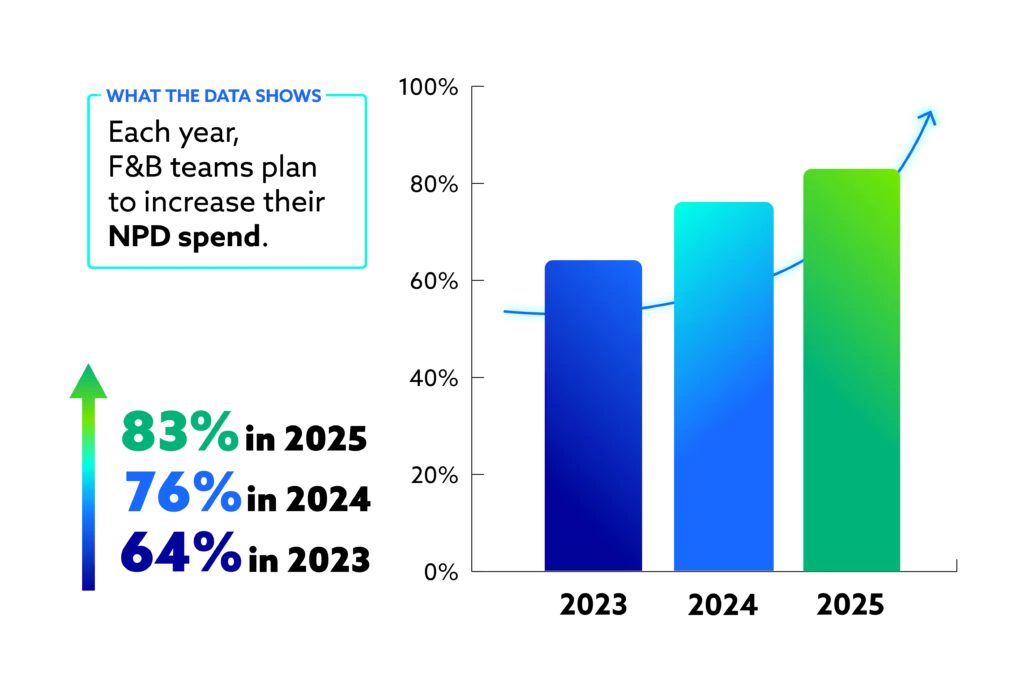
More money is flowing into innovation. Expectations are rising with it.
Translation:
Innovation budgets are growing. So is the pressure to make every dollar count.
2. NPD is under pressure to pick up the pace
More pressure + more complexity + more products = more work.
Top 3 factors driving more investment in NPD from 2024 to 2025:

#1 Cost pressure
Find smarter ways to manage ingredient and manufacturing costs.

#2 Consumer pressure
Keep up with demand for healthier products.

#3 Competitive pressure
Stay innovative or get left behind.
The bottom line:
“Change is inevitable in NPD. Turning every change into a fire drill isn’t. Yet today’s teams are being asked to make faster, more complex decisions with the same limited resources.”
— Paul Bradley, Sr. Director of Product Marketing, TraceGains
3. Manual NPD workflows are hitting a limit
Innovation moves faster, while manual work sticks around.

In other words:
We’re trying to innovate at 2026 speed with workflows built for 2016.
4. AI is moving into the NPD mainstream
The AI conversation is changing fast.
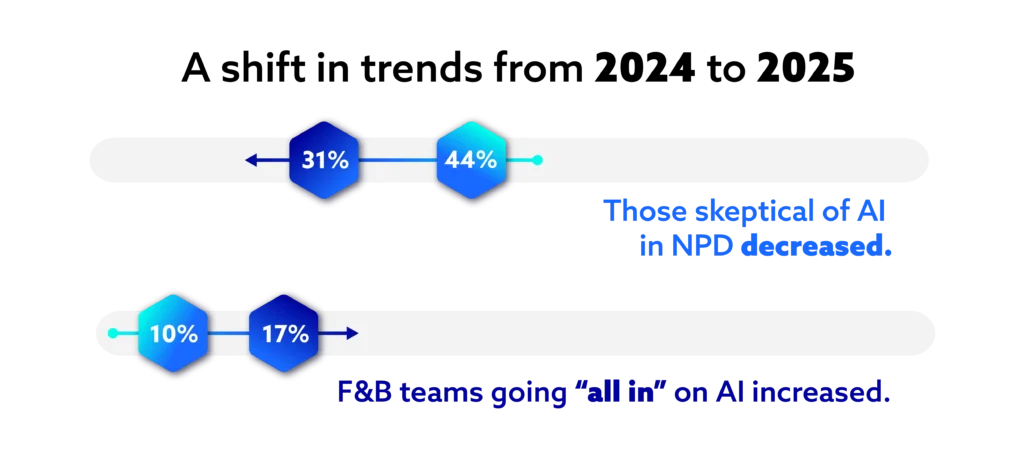
By 2026:
35% are exploring practical AI use cases
Key takeaway:
The question is shifting from “Should we use AI?” to “Where can it actually make us better?”
5. Context determines AI’s impact
AI can’t fix a disconnected NPD process by itself.
If your teams are still:
- hunting through spreadsheets
- re-entering ingredient data
- comparing versions manually
- chasing supplier information
- passing files between systems
…adding AI to the top of the pile doesn’t eliminate the pile.
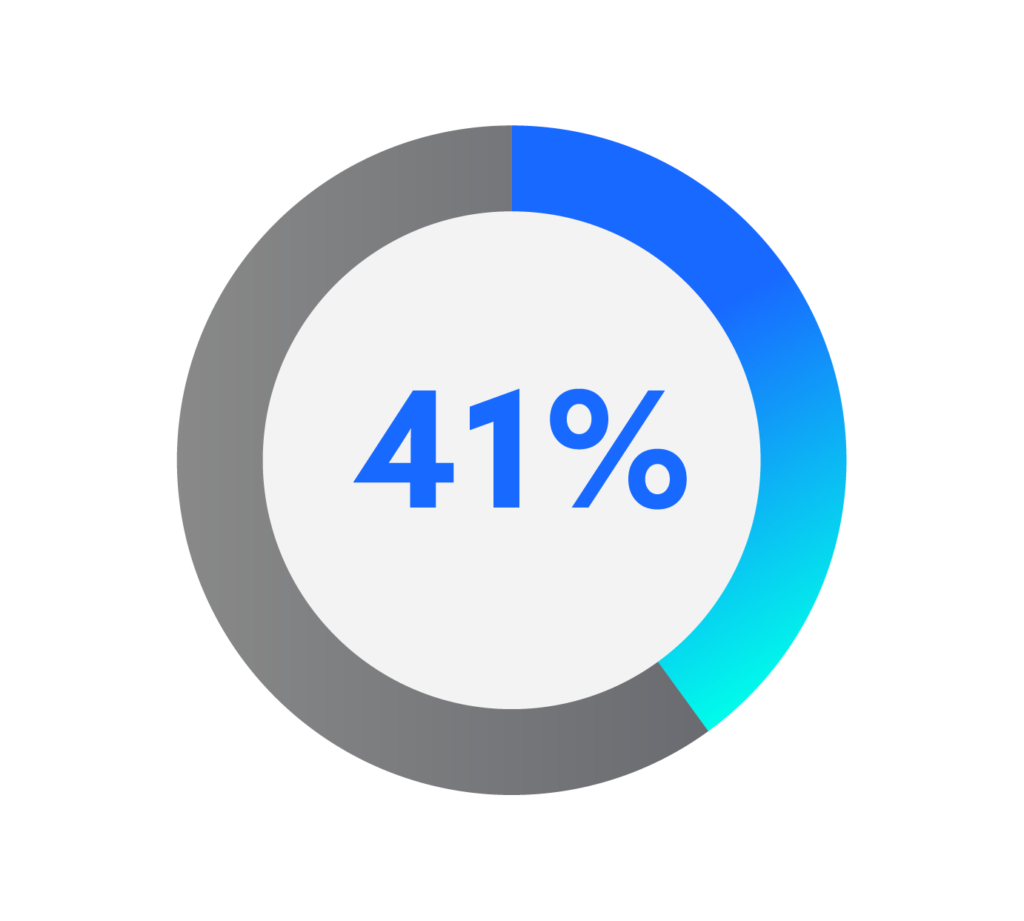
In 2026, 41% are using AI across NPD activities, from regulatory research and formulation to supplier and ingredient risk analysis.
Industry insight:
“AI is only as useful as the data, context, and workflow surrounding it. The next leap is giving R&D and food scientists trusted intelligence they can actually act on.”
— Paul Bradley, Sr. Director of Product Marketing, TraceGains
6. Connected product development software is reshaping the F&B stack
Modern product development puts connected intelligence closer to the work. From:
Siloed → Connected
Manual comparing → Automated
Late review → Earlier insight
Disconnected data → Context-rich decisions
AI hype → AI grounded in real food science
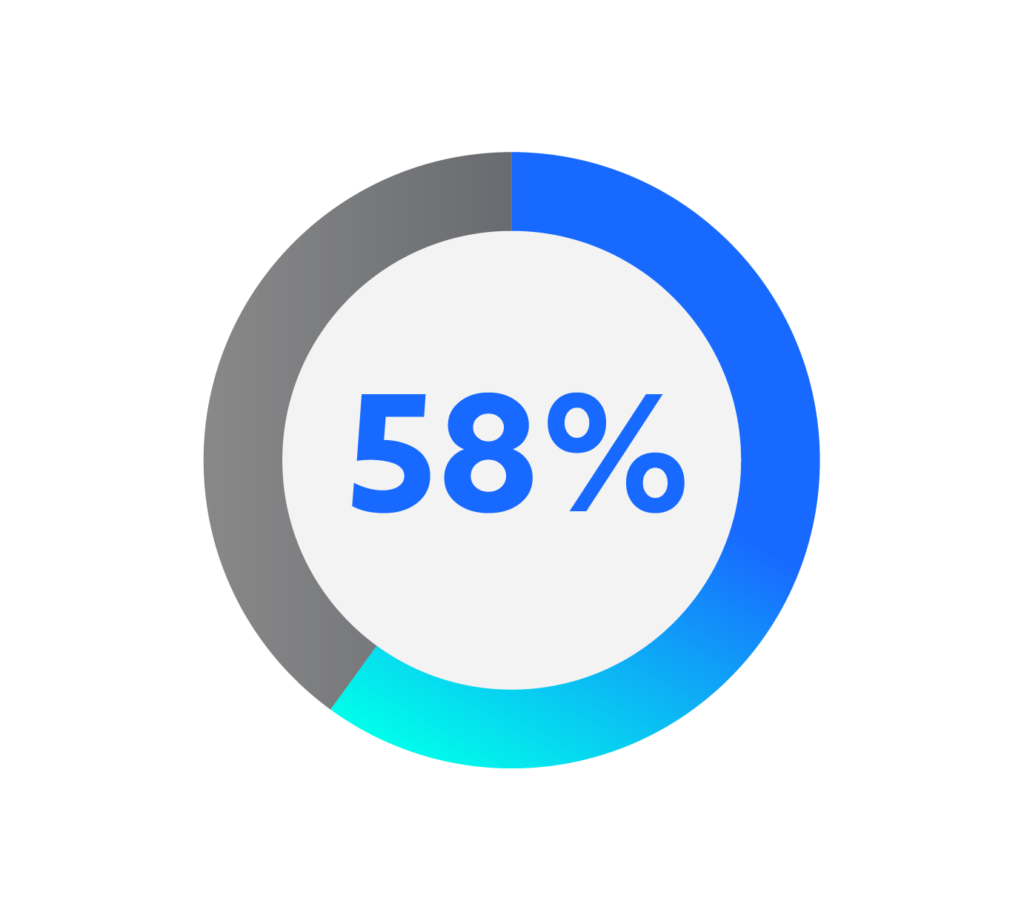
In 2026, 58% of F&B leaders said that real-time connected data and AI-powered workflows will define the next era of F&B operations.
Lesson:
Free teams to focus on innovation by connecting the data, workflows, and intelligence behind NPD.
Your innovation strategy has evolved. Your NPD workflow should too.
See what TraceGains product development software can do for F&B teams.
Sources:
- 2026 State of Digital Transformation
- 2025 Official NPD Report
- 2025 Digital Divide Report
- 2024 Official NPD Report
Frequently asked questions:
Product development software connects the data, processes and teams involved in taking food and beverage products from concept and formulation through validation and launch, helping teams reduce manual work, improve collaboration and move products to market faster.
AI is helping food and beverage teams accelerate formulation, evaluate ingredient alternatives, and assess nutrition, cost, and compliance trade-offs earlier. As industry research shows AI adoption in NPD is growing, connected ingredient data and workflows are key to turning AI experimentation into practical innovation while reducing manual work and reformulation delays.