Recalls used to be surgical. Now they’re sweeping.
What once might have involved a single production line and a single shift can quickly escalate into multi-line, multi-week events with regulators asking broader questions, insurers scrutinizing claims, and plaintiff attorneys circling.
In the TraceGains webinar Top 4 Changes in Food Recalls and How Companies Can Respond, contributor Shawn Stevens, founding member of Food Industry Counsel, LLC, put it plainly:

“The scope of recalls is expanding, and I’d say it’s expanding really, really fast. It used to be the agencies, FDA and USDA, gave a lot of deference to food companies in their root cause… and then limit the recall to relatively discrete amount of product. Well, the world has changed in the last two years.”
Shawn Stevens | Founder, Food Industry Lawyer | Food Industry Counsel LLC
Shawn Stevens is the founding member of Food Industry Counsel LLC, the only law firm in the United States that represents the food industry exclusively. As a food industry consultant and lawyer, Mr. Stevens works with food industry clients (including the world’s largest growers, processors, restaurant chains, distributors and grocers) helping them protect their brand by complying with FDA and USDA regulations, reducing risk, managing recalls, and defending high-profile foodborne illness claims.
That shift has massive implications for today’s food and beverage (F&B) leaders, especially when it comes to managing the scope of food recalls. What determines whether a recall remains contained or spirals outward? Increasingly, it’s data.
From targeted recalls to “prove a negative”
One of the most significant changes Stevens described is the regulatory expectation that companies prove not only where contamination occurred, but where it didn’t.
If Listeria is found on Line 2, regulators may ask:
- How can you prove it didn’t migrate to Line 1?
- How can you prove it didn’t spread to Line 3?
- How can you prove it didn’t persist beyond one shift?
In Stevens’ words, companies are being pushed to demonstrate that contamination didn’t “float” across a facility.

That’s a tall order.
Without detailed environmental monitoring data, sanitation logs, traffic flow controls, lot traceability, and corrective action documentation, uncertainty works against you. And when uncertainty creeps in, food recall scope expands.
Today, the burden of proof is heavier, and it moves fast.
The cascading consequences of expanded recall scope
Expanding the scope of food recalls doesn’t just mean pulling more product.
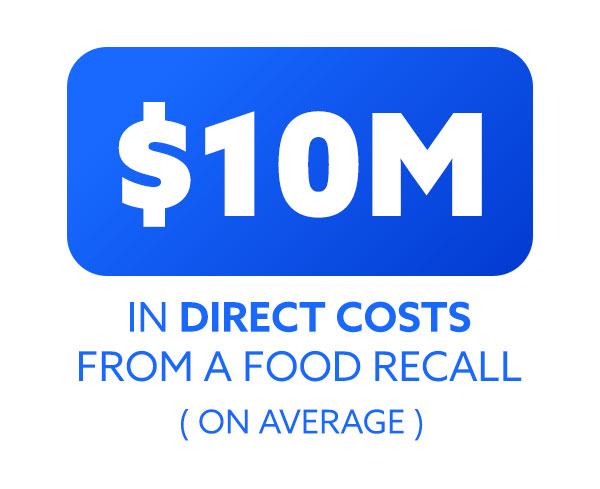
It can trigger:
- Pressure to shut down lines or facilities
- Public warning letters
- Heightened retailer scrutiny
- Class action lawsuits
- Insurance coverage disputes
Each layer compounds financial and reputational risk.
Stevens has seen firsthand how regulators are increasingly aggressive in pathogen cases, especially around ready-to-eat environments and Listeria control programs. If you cannot quickly demonstrate containment and control, agencies may assume systemic risk.
And the broader the recall, the louder the public narrative becomes.
This is no longer just a quality issue. It’s a boardroom issue.
Data is the new risk containment tool
In this environment, documentation isn’t administrative; it’s defensive.
Environmental monitoring records, supplier approvals, ingredient specifications, lot histories, sanitation verification, and corrective action workflows all serve one purpose during a recall: defining the boundary.
Strong data allows you to:
- Show where contamination was isolated
- Demonstrate effective controls
- Establish time-stamped corrective actions
- Negotiate recall classification
- Limit unnecessary product destruction
Without centralized, structured information, you are left explaining instead of proving.
And regulators rarely narrow recall scope based on explanations alone.
“Wishful thinking is never a good strategy. Knowing your supply chain, knowing your suppliers, focusing on the higher risk types of ingredients… making them better so we can become better. That’s, I think, the best strategy.”
—Shawn Stevens, founding member of Food Industry Counsel, LLC
Proactive supply chain visibility is not optional; it’s foundational to managing the scope of food recalls.
Building a data-first recall strategy
Defensible recalls start long before an event occurs.
A data-first strategy includes:
- Centralized supplier documentation
- Real-time lot traceability
- Structured environmental monitoring trend analysis
- Automated version control for specifications
- Cross-functional visibility between QA, regulatory, legal, and operations
It also means integrating supplier risk management into daily operations, not treating it as an annual audit exercise.
When contamination occurs, regulators move quickly. If your documentation lives across spreadsheets, shared drives, and inboxes, response speed slows, and recall scope widens.
The organizations that contain recalls effectively aren’t necessarily those who never face them. They’re the ones who can demonstrate control immediately.

The “12 jurors” test
Stevens offers a simple but powerful decision framework:
“When we’re faced with difficult food safety decisions… we have to ask ourselves this question… What would twelve jurors think? If we ask ourselves that question and we’re honest with the answer, we’ll always, always make the right food safety decision.”
This test reframes recall management.
It forces transparency. It demands integrity. And it underscores why documentation matters.
If internal records show hesitation, incomplete monitoring, or reactive controls, the narrative shifts. But if they show proactive risk management and decisive action, that same documentation becomes a shield.
Data shapes the story.
Defending the brand before the crisis
Despite the growing pressure, there is reason for optimism.
“Food safety culture is really taking ahold,” Stevens noted. “It’s something that is part of the routine conversation now… the use of AI and making our supply chains more bulletproof and less vulnerable — all of those things come together as a constellation in the sky. And it does burn brightly.”
That constellation—culture, technology, supplier accountability, and data transparency—is what ultimately protects brands.
True control over food recall scope comes from disciplined, data-driven systems that make containment transparent and defensible in real time.
- Knowing your suppliers deeply.
- Understanding ingredient risk profiles.
- Embedding visibility across the lifecycle of product development and production.
In today’s regulatory climate, the companies that thrive are those who treat supplier management and food safety data as strategic assets, not back-office functions.
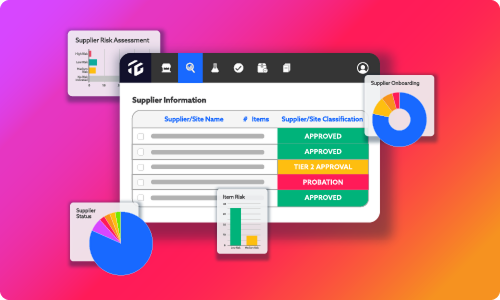
If you’re ready to strengthen your ability to contain risk before it spreads, explore how modern Supplier Management solutions from TraceGains can centralize supplier intelligence, improve traceability, and give your teams the defensible data they need when it matters most.