If you work in food safety & quality (FSQ), you don’t need anyone to tell you how chaotic certificates of analysis (COAs) have become. Supplier formats keep changing, bad scans slow down reviews, templates break without warning, and manual zoning feels like an endless tax on your time. That’s why IDP for quality teams has become one of the fastest-growing technologies in the food & beverage industry, not as a “nice-to-have,” but as a critical safeguard against daily disruption.
Quality leaders are facing more pressure than ever: tighter timelines, evolving requirements, supplier variability, and zero margin for error. It’s no surprise that more brands are rethinking how they manage documents and data. And TraceGains’ Intelligent Document Processing (IDP) is helping them shift from reactive, manual work to a more resilient, automated, and collaborative model.
Here are the five biggest reasons food & beverage (F&B) brands are adopting IDP right now.
1. Setting up COAs has become a massive productivity drain
Every FSQ team knows the pain: manual set up of COAs for optical character recognition (OCR) systems is slow, repetitive, and incredibly prone to error. Even worse, it steals time away from more critical, high-value work like investigations, continuous improvement, and supplier performance.
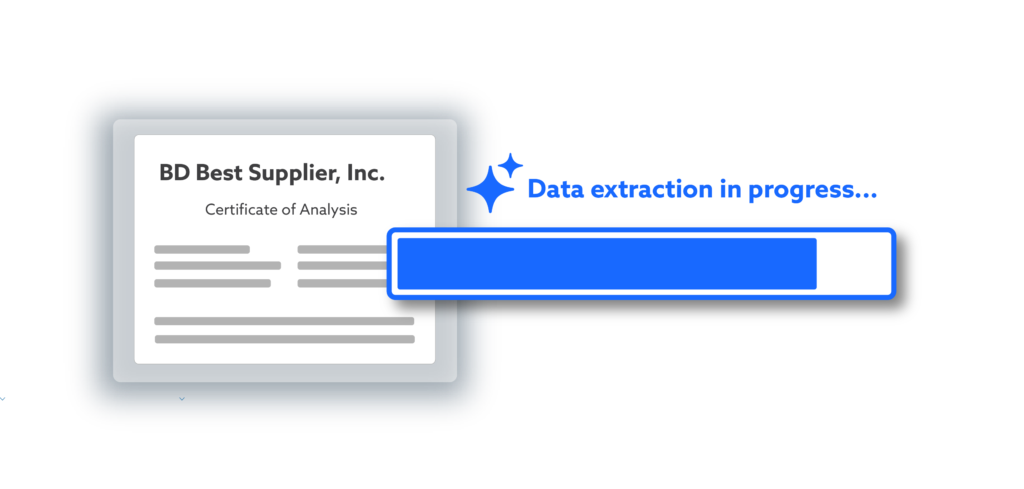
IDP eliminates manual zoning entirely.
Instead of drawing boxes, adjusting coordinates, and rebuilding templates every time a supplier updates a document, IDP simply reads the COA as-is. It identifies fields, extracts data, and returns structured, accurate results without human setup.
FSQ leaders adopting IDP say the biggest immediate win is the time they get back. Hours per week. Sometimes dozens of hours per week, especially for teams managing hundreds or thousands of COAs a month.
2. Supplier COA changes no longer break workflows
A single supplier changing their COA format or, 20 suppliers all sending inconsistent layouts can throw an entire workflow off balance. Templates break, extra verification steps appear, and suddenly the week derails.
IDP was built to eliminate this fragility.
Because IDP interprets documents dynamically, not through rigid templates, layout changes don’t require manual fixes. New format? New arrangement of fields? A supplier suddenly sends a multi-page scan instead of a clean PDF?
IDP keeps going.
This resilience is one of the clearest reasons FSQ teams move to IDP: it removes the constant firefighting and gives them confidence that no matter what suppliers send, their workflow keeps flowing.
3. It extracts data accurately from any format, even poor scans
COAs, allergen statements, nutritional data sheets—they all come in different shapes, sizes, orientations, and quality levels. Traditional OCR systems can struggle when a document is slightly crooked, lightly smudged, or saved as an image inside a PDF.
IDP, on the other hand, can read almost anything:
- Condensed text blocks
- Weird layouts
- Low-quality scans
- Rotated pages
- Non-standard tables
- Condensed text blocks
Instead of teams spending hours cleaning, retyping, or reformatting content, IDP pulls clean data the first time, dramatically reducing rework and minimizing the chance of transcription errors sneaking into quality records or digital systems.
In an industry where accuracy is everything, this alone is a game-changer.
4. It turns old OCR templates into smart AI templates, no rebuilding needed
Many teams considering IDP aren’t starting from scratch. They’ve already spent years building brittle template libraries in legacy document systems, and the thought of rebuilding them is enough to stall any transformation project.
That’s where modern IDP stands out.
TraceGains’ purpose-built technology can convert existing templates into AI-driven models automatically, without requiring:
- New zoning
- Mapping fields again
- Rewriting extraction logic
- Or manually creating hundreds of replacement templates
This “lift and shift” capability removes one of the biggest barriers to modernization. Instead of months of configuration, teams can get up and running quickly and finally escape the never-ending maintenance cycle of traditional OCR.
5. It creates opportunities to collaborate with suppliers, not chase them
Here’s a benefit many FSQ teams don’t expect: IDP improves supplier relationships.
When brands can share insights about where COA errors occur, which formats cause issues, or how layout consistency can improve mutual efficiency, it sparks better collaboration. Instead of audits and corrections driving tension, data becomes the basis for partnership.
Suppliers also appreciate clarity:
- They can adopt improvements that help every customer
- They know which details matter most
- They get fewer rejections and follow-ups
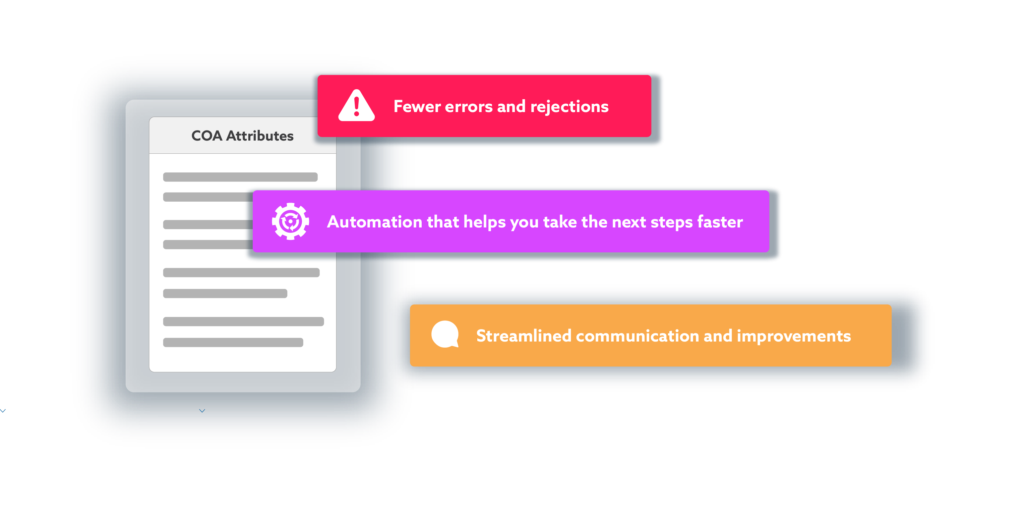
Our customers see that IDP offers more than automation, becoming a foundation for cleaner, more reliable data exchange across the supply chain.
FSQ teams are ready for a better way
FSQ leaders are done with the constant rework, the template maintenance, the unreadable documents, and the fragile manual processes that slow them down. That’s why IDP is quickly becoming essential for food & beverage quality teams.
- It saves time.
- It increases accuracy.
- It strengthens supplier partnerships.
And it gives quality teams room to focus on the work that really moves the needle.
If you’re ready to see how AI can transform your own quality workflows, explore what TraceGains IDP can do.