Geography has always mattered to food and beverage manufacturers. Ingredients, suppliers, logistics routes, and agricultural regions all shape how products are sourced and produced. But in recent years, global supply shocks—from pandemics to geopolitical tensions—have pushed geographic risk higher on the list of strategic concerns.
The latest flashpoint raising questions for global supply chains is the Strait of Hormuz.
This narrow waterway between the Persian Gulf and the Gulf of Oman serves as one of the most critical energy transit routes in the world. A significant share of global oil shipments moves through this corridor every day. When geopolitical tension, shipping disruptions, or security concerns affect this route, global energy prices often respond quickly.
And for food and beverage manufacturers, energy is not just a utility cost; it’s embedded in nearly every step of the supply chain. From fertilizer production to packaging materials to factory operations, energy volatility can quietly reshape the economics of manufacturing.
“Food manufacturers don’t operate in isolation. A disruption in global energy flows can ripple through agriculture, ingredients, packaging, and production. The real challenge is having the visibility and agility to respond before those shocks slow innovation.”
—Emma Karp, Sr. Product Manager
In other words, what happens in a distant maritime corridor can ultimately influence how your next product is sourced, produced, and launched.
Here are five ways disruptions around the Strait of Hormuz can ripple through the food manufacturing industry, and shape the geography of your next product launch.
1. Energy costs change how products are made
Food manufacturing is fundamentally energy intensive.
Ovens, pasteurization systems, refrigeration, freezing tunnels, drying equipment, and packaging lines all rely heavily on consistent energy inputs. When energy prices spike, production teams often look for ways to reduce consumption.
Sometimes that means adjusting processes in subtle but meaningful ways:
- Baking products at slightly lower temperatures for longer cycles
- Modifying cooling or freezing times
- Consolidating production runs to reduce equipment startups
- Adjusting batch sizes to optimize energy efficiency
These operational tweaks can affect texture, shelf life, throughput, and product consistency. What began as a global shipping disruption may ultimately influence how a product is manufactured on the factory floor.
2. Packaging costs that suddenly spike
Energy shocks also ripple into packaging materials.
Many common packaging inputs—such as plastics, films, and resins—are derived from petrochemicals. When oil prices rise due to disruptions in key transit routes like the Strait of Hormuz, the cost of producing those materials often increases as well.
For food companies, that can lead to:
- Sudden increases in packaging costs
- Pressure to redesign packaging formats
- Switching between suppliers or materials
- Delays while new packaging specifications are validated
If packaging changes occur late in a product development cycle, they can easily delay launches or trigger additional regulatory and labeling checks.
3. Agricultural inputs become more expensive
The effects extend even further upstream.
Energy price volatility can increase the cost of producing fertilizers, which are heavily energy dependent. When fertilizer costs rise, farmers often pass those increases along through higher ingredient prices.
For food manufacturers, this can mean unexpected volatility in:
- Grains
- Vegetable oils
- Dairy inputs
- Specialty ingredients
These upstream shocks can force procurement teams to rethink sourcing strategies or R&D teams to revisit formulations to maintain margins.
4. Supplier networks suddenly shift
When supply shocks ripple through the system, supplier availability can change quickly.
A manufacturer might suddenly need to:
- Onboard a new ingredient supplier
- Qualify an alternate packaging vendor
- Source materials from a different region
- Verify documentation for new suppliers under tight timelines
Without strong supplier visibility, these pivots can introduce risk, particularly when documentation, certifications, or specifications are scattered across email threads and spreadsheets.
Digital supplier networks allow manufacturers to quickly evaluate alternatives, access documentation, and maintain traceability even as supply chains shift.
5. Innovation timelines get compressed
Perhaps the most overlooked impact of global supply disruptions is how they affect product innovation itself.
When costs rise across energy, packaging, and ingredients, R&D teams are often asked to adjust formulations quickly to maintain profitability.
That may mean:
- Reformulating to use alternative ingredients
- Switching suppliers mid-development
- Redesigning packaging materials
- Adjusting production processes to improve efficiency
Innovation cycles become less predictable, and the ability to rapidly evaluate suppliers and materials becomes a competitive advantage.
The supply chain is global—your visibility should be too
Global chokepoints like the Strait of Hormuz are reminders that modern food manufacturing depends on a deeply interconnected supply network.
Companies that respond fastest to disruption are often those with the greatest visibility into their suppliers, ingredients, and documentation.
“Modern food manufacturing demands visibility across the supplier network, from data and specifications to documentation, so teams can pivot quickly without compromising compliance or speed to market.”
—Emma Karp, Sr. Product Manager
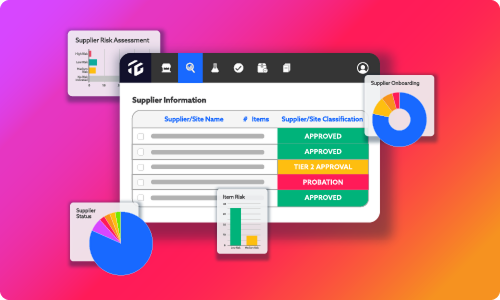
Modern supplier management platforms help food manufacturers maintain that visibility by centralizing supplier data, documentation, and collaboration in one place.
That means when global supply shocks occur, teams can move faster—qualifying new suppliers, validating documentation, and maintaining innovation timelines.
Building resilience amid global supply shocks
While no company can control geopolitical events, food manufacturers can build systems that make them more resilient when disruptions occur.
Some practical strategies include:
- Diversify supplier networks to reduce dependence on a single region
- Maintain visibility into supplier documentation and certifications
- Digitize ingredient, packaging, and specification data for faster decision-making
- Enable collaboration between procurement, R&D, and quality teams
- Adopt modern supplier management platforms that connect suppliers, data, and documentation in one place
Explore how modern Supplier Management solutions from TraceGains help food and beverage manufacturers strengthen supplier visibility and maintain innovation momentum, even when global supply routes tighten.