






Ultra-processed foods, federal dietary guidance, and food & beverage strategy are colliding. When definitions are unclear, brands become the translators. And that tension is front and center in the latest U.S. Dietary Guidelines released by HHS and the USDA. This is the most significant reset of federal nutrition policy in decades. More than influencing what Americans are encouraged to eat, the new framework underpins dozens of federal feeding programs and reshapes how food is evaluated, discussed, and regulated across the industry.
Perception is already shaping behavior:
- US: Seven out of 10 shoppers report actively avoiding ultra-processed foods (UPFs), according to a Food Integrity Collective survey.
- UK: Over one-third of adults want UPFs banned outright, according to Mortar Research.
- Retail expectations: 66% of UK consumers believe supermarkets should take more responsibility for the UPFs they sell.
- Labeling demand: 77% of UK consumers want clear warning labels on foods containing ultra-processed ingredients.
- Globally: UPFs, as defined by the NOVA classification system, make up nearly 50% of the diet in the U.S. and UK, compared to less than 25% in countries such as Italy, Greece, Portugal, Cyprus, and across much of Asia.
These shifts are unfolding alongside mounting political and legal pressure. The MAHA (Make America Healthy Again) agenda in the U.S. has accelerated additive bans and ingredient scrutiny at the state level, while California’s current lawsuit against food companies—and its passage of AB 1264, making it the first state to legally define UPFs—underscores how quickly guidance can morph into enforcement.
For brands, this creates an urgent moment of translation. Science, policy, and public perception are no longer moving in lockstep. And brands are caught in between. So what do the new dietary guidelines mean for food & beverage (F&B) right now? Less certainty, more scrutiny, and a growing need to act before definitions become mandates.
The policy-science gap brands are stuck in
The Dietary Guidelines increasingly emphasize limiting added sugars, prioritizing nutrient density, and reducing reliance on foods perceived as “highly processed.” At the same time, policymakers are debating how, or whether, to formally define ultra-processed foods at the federal level.
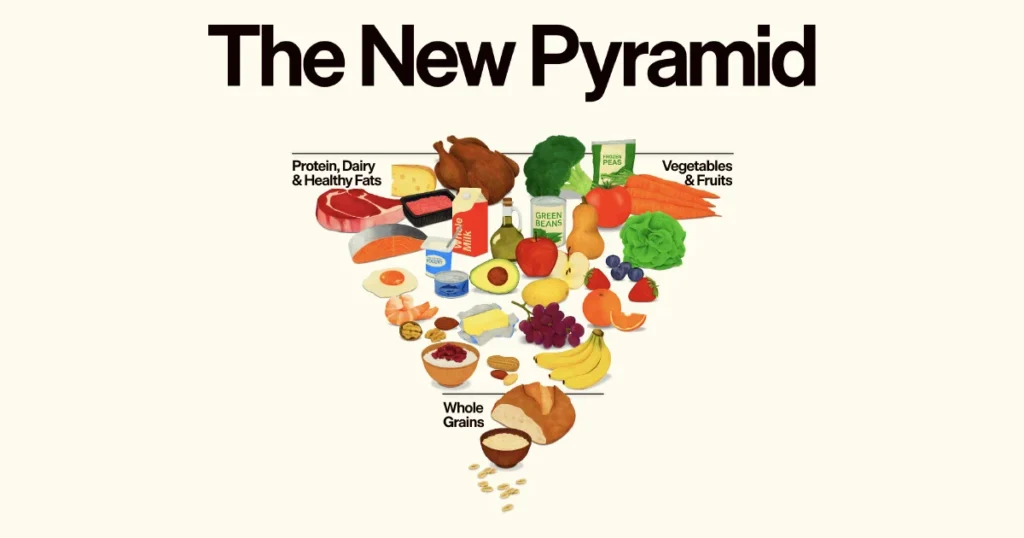
U.S. Department of Agriculture/U.S. Department of Health and Human Services.
That ambiguity hasn’t slowed momentum. States like California are already taking legal action, arguing that UPFs contribute to public health crises and that food companies have failed to adequately warn consumers. At the same time, laws like Arizona’s HB 2164 take a very different approach, defining UPFs purely by a list of restricted additives without addressing nutritional content or degree of processing at all. The result is a fragmented regulatory landscape where definitions vary by state, and brands are being judged not just on compliance, but on intent, transparency, and trust.
“We’re seeing policy move faster than scientific consensus. The challenge now is to interpret evolving guidelines, anticipate regulatory risk, and adapt product strategies in a way that protects innovation, preserves consumer trust, and prepares portfolios for a post-UPF world.”
— Kari Barnes, Regulatory Standards Manager
Why words like “ultra-processed” carry so much weight
Even without a finalized definition, certain terms are gaining traction in policy and public discourse:
- Highly processed often signals excessive modification, additives, or industrial techniques even when products are nutritionally sound.
- Ready-to-eat has become shorthand for convenience foods assumed to be less healthy, regardless of formulation.
- Added sugar is increasingly treated as a red flag ingredient, influencing both regulatory focus and front-of-pack perception.
- Additives are also a key part of the nomenclature, with California joining other states in defining UPFs, at least in part, by the presence of certain formulation ingredients such as coloring agents, preservatives and emulsifiers.
These phrases matter because consumers don’t parse them scientifically. They respond emotionally. Labels and headlines simplify complex food systems into good vs. bad narratives, and brands are left to explain nuance in an environment that rewards clarity over complexity.
“Nutrition and labeling teams aren’t just validating numbers anymore, they’re shaping how products are understood. As dietary guidance changes, brands will have to carefully navigate public perception while remaining compliant.”
— Jill Hohnstein, Nutrition & Labeling Manager
F&B survival tactics in a post-UPF world
Forward-thinking brands aren’t waiting for regulators to draw the final lines. They’re adapting now, using strategy (not fear) to guide innovation.
1. Differentiate on taste + convenience, without the additive crutch
Convenience isn’t going away. But brands that can deliver great taste and ease without defaulting to additives commonly associated with UPFs will stand out. This means smarter ingredient sourcing, functional alternatives, and tighter formulation control.
2. Take a proactive ingredient and labeling strategy
Transparency is becoming a competitive advantage. Brands that understand exactly what’s in their formulas, and how those ingredients show up on labels, are better positioned to respond to regulatory shifts and consumer questions.
3. Design for future definitions, not today’s loopholes
Waiting for a formal federal UPF definition is risky. Designing products that can flex as definitions evolve, for example, by minimizing added sugars, simplifying ingredient lists, and documenting sourcing decisions, reduces future reformulation costs and reputational risk.
Why data is the new translator
As brands navigate this uncertain landscape, technology becomes the bridge between science, policy, and perception.
With TraceGains Supplier Management and Formula Management, brands gain visibility into ingredient origin, specifications, and supplier documentation, making it easier to validate claims and support cleaner formulations. Pair that with TraceGains NutriCalc, and teams can quickly assess nutritional impact, model formulation changes, and ensure labeling accuracy before products hit the market.
And with Packaging Specification Management and artwork integration through WebCenter Go, those decisions carry through to execution, helping teams ensure packaging and labels accurately reflect approved ingredients, nutritional values, and product claims across every SKU and market.
Together, these tools help brands move from reactive compliance to proactive innovation, translating complexity into clarity for regulators and consumers alike.
The bigger picture for F&B
The debate over ultra-processed foods ultimately raises a bigger issue: who do consumers trust to define what’s healthy? As dietary guidelines continue to evolve and legal pressure increases, brands that succeed will be those that embrace their role as translators: between science and policy, formulation and perception, innovation and responsibility.
The question isn’t whether the rules will change. It’s whether your products, and your processes, are ready when they do.
Ready to future-proof your product development?
Discover how TraceGains’ NPD solutions can help you innovate with confidence, adapt to evolving guidelines, and stay ahead in a post-UPF world.